Arrive Ready for Buffalo's Late-October Weather
Late October can bring quick weather changes around Buffalo. Cool days may turn into chilly nights, and rain, wind, frost, or an early dusting of snow can all be part of the plan. We recommend checking the Buffalo and Cheektowaga forecast a few days before leaving, then checking it again on travel day.
Packing for more than one forecast helps you stay comfortable when conditions shift. Instead of bringing only light fall clothes or only heavy winter gear, build a mix that works for damp mornings, breezy afternoons, and cold evenings.
- Layered shirts, fleece, and warm socks
- Waterproof outerwear and an umbrella
- Sturdy shoes with good grip for wet ground
- Extra blankets for the RV
- Pet towels and insulated bedding for your travel companion
For travelers searching for RV parks near Buffalo, NY, our Cheektowaga camping details can help you plan a practical stopover while you explore Buffalo, Niagara Falls, and Western New York. Full hookups, reliable Wi-Fi, cell signal, and a pet-friendly setting can make a cold or rainy travel day feel much easier.
Check Forecasts and Build a Flexible Arrival Plan
Whenever possible, plan to arrive while there is still daylight. Late-October days get dark earlier, and it is simply more comfortable to pull into an unfamiliar site, level your RV, and connect utilities when you can clearly see what you are doing.
Give yourself extra drive time if rain, wind, wet leaves, or lower visibility are in the forecast. Keeping fuel levels healthy and watching for route alerts can help you avoid a rushed arrival. If the weather changes your sightseeing plans, it also helps to have an indoor option in mind.
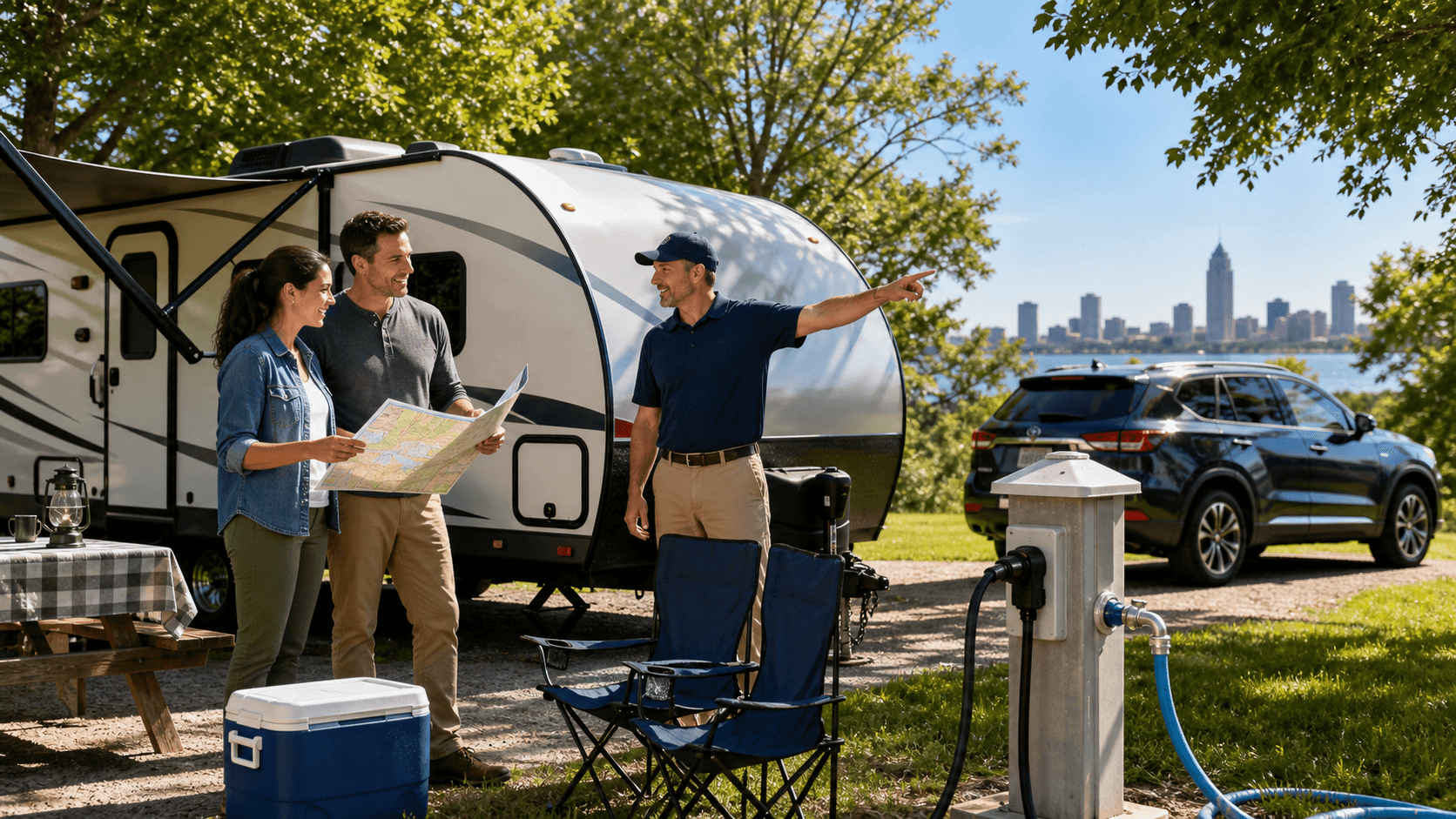
Buffalo can be a convenient home base for road-trippers who want city attractions as well as a visit to Niagara Falls. Before leaving home, we suggest confirming your stay details and checking your route one more time, especially when changing weather could affect your timing.
Prepare Plumbing for Cold Nights
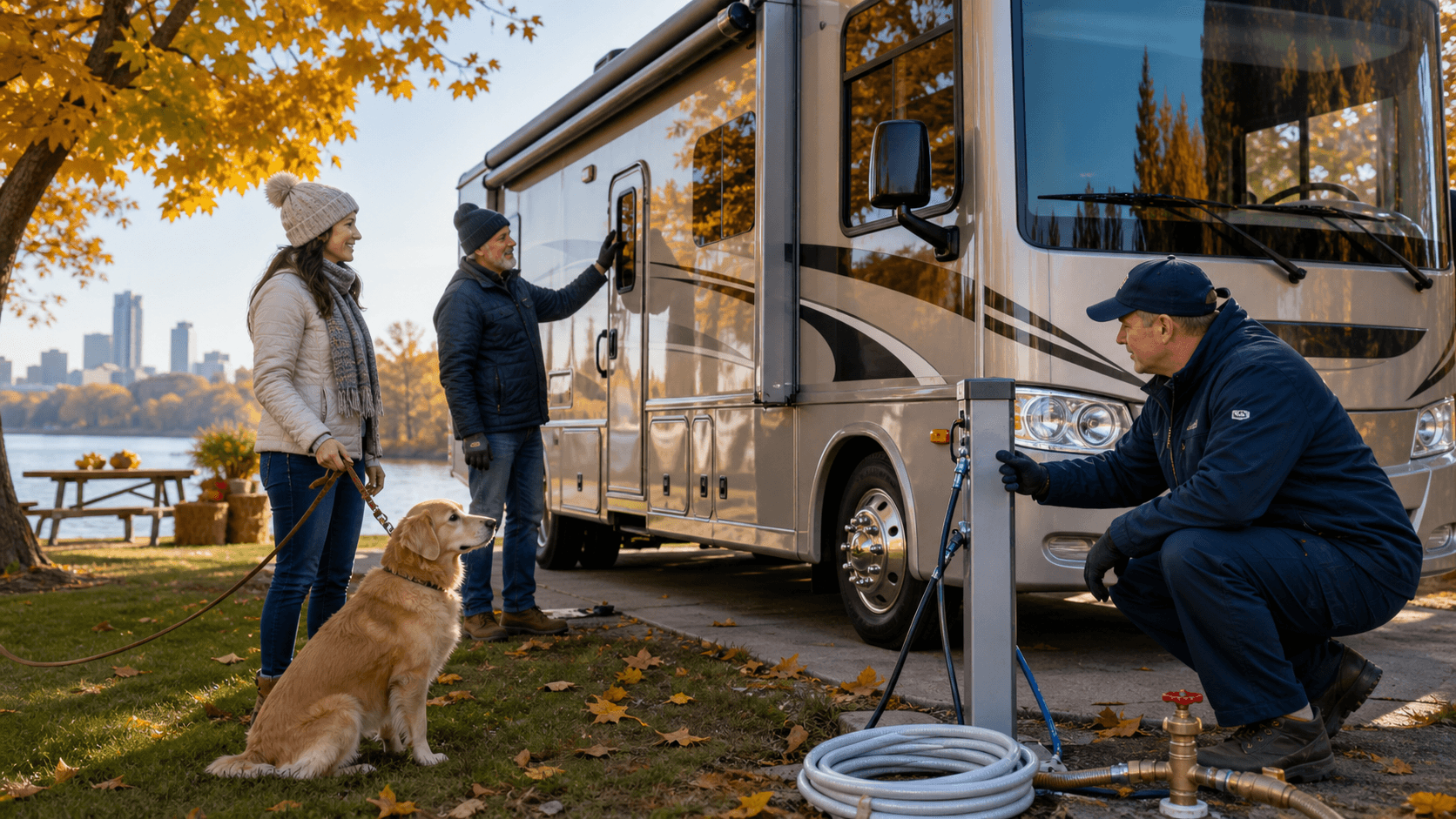
A short cold-weather stop is different from putting your RV away for the season. If you are continuing south or traveling through milder areas afterward, you may not need a full winter shutdown. Still, it is smart to protect exposed plumbing and pay close attention to the forecasted overnight low.
Your RV manufacturer's guidance should lead the way for tank care, plumbing, and furnace use. We also suggest arriving with a few cold-weather supplies on hand, so a surprise chilly night does not catch you unprepared.
- A heated potable-water hose when conditions call for one
- Hose insulation and a water pressure regulator
- RV-safe antifreeze
- A basic tool kit for minor setup needs
- Extra towels for drying wet connections
Overnight temperatures can drop quickly, even after a decent afternoon. Planning for the low temperature, not only the daytime high, gives you a better sense of what your RV setup may need.
Protect Connections and Manage Tanks Carefully
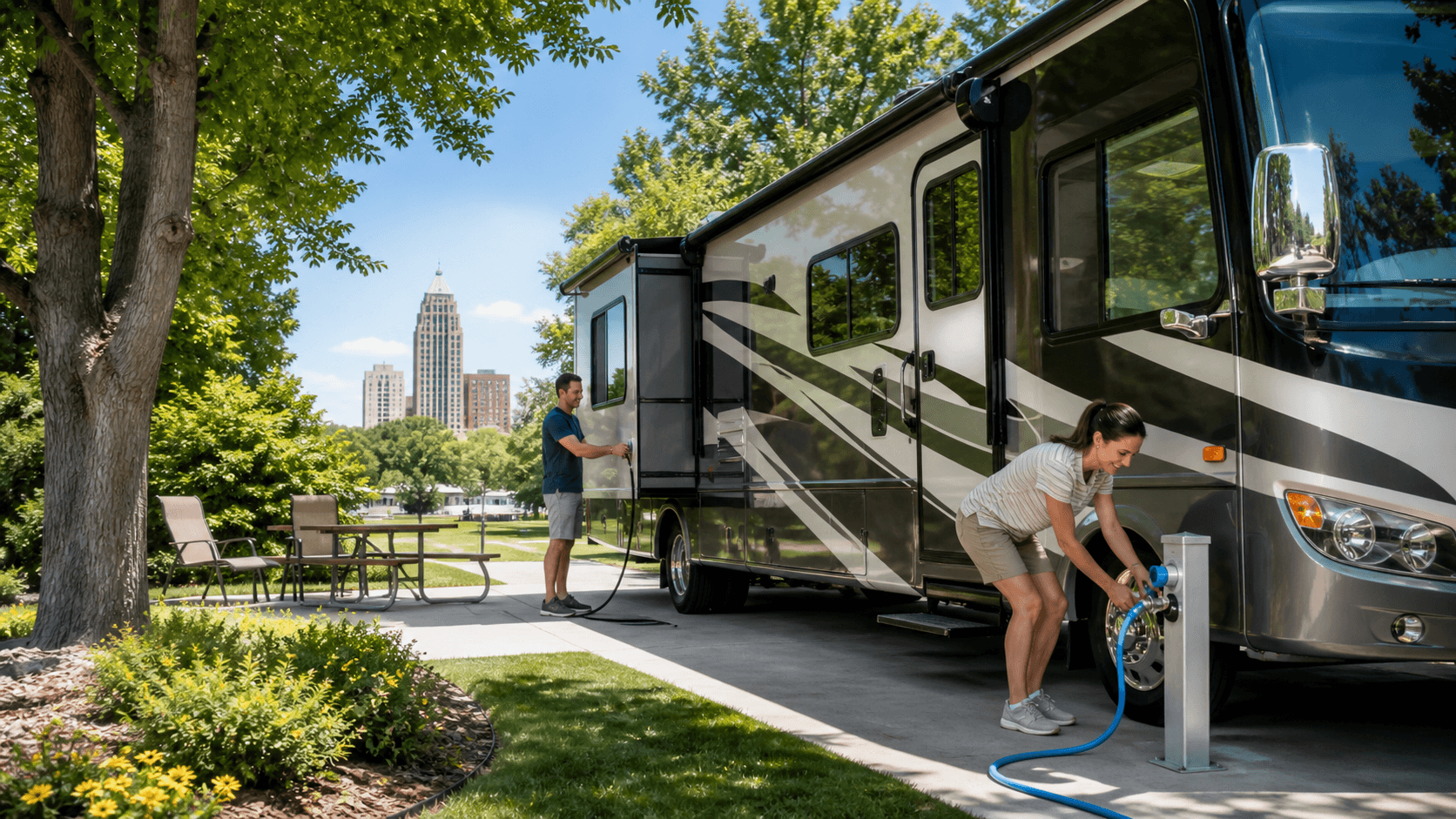
Wet conditions call for a calm, careful arrival routine. Before connecting, inspect your power cord, water hose, and fittings for damage. Keep electrical connections dry, and avoid placing cords or connections where standing water could collect. If anything looks worn or unsafe, it is better to pause than force a connection.
Our full-hookup sites include 30A or 50A electric, potable water, and sanitary hookups. That setup can make a late-season stop more comfortable, especially after a damp day on the road. Once you are parked, take a few minutes to make sure each connection is secure and that your furnace settings are ready for the evening.
Tank management matters, too. Monitor gray and black tank levels, keep valves closed until it is time to dump when appropriate, and use RV-approved tank products. Site conditions and seasonal procedures can vary, so we encourage guests to ask for setup guidance when they arrive rather than assuming every campground handles late-season weather the same way.
Plan Around Shorter Days and Settle in Comfortably
With less daylight to work with, a simple sightseeing plan often feels better than trying to fit everything into one day. We suggest choosing one main outing, then leaving room for weather, traffic, and a relaxed return to your RV. A Buffalo food stop, waterfront walk, museum visit, or Niagara Falls excursion can each make a great day on their own.
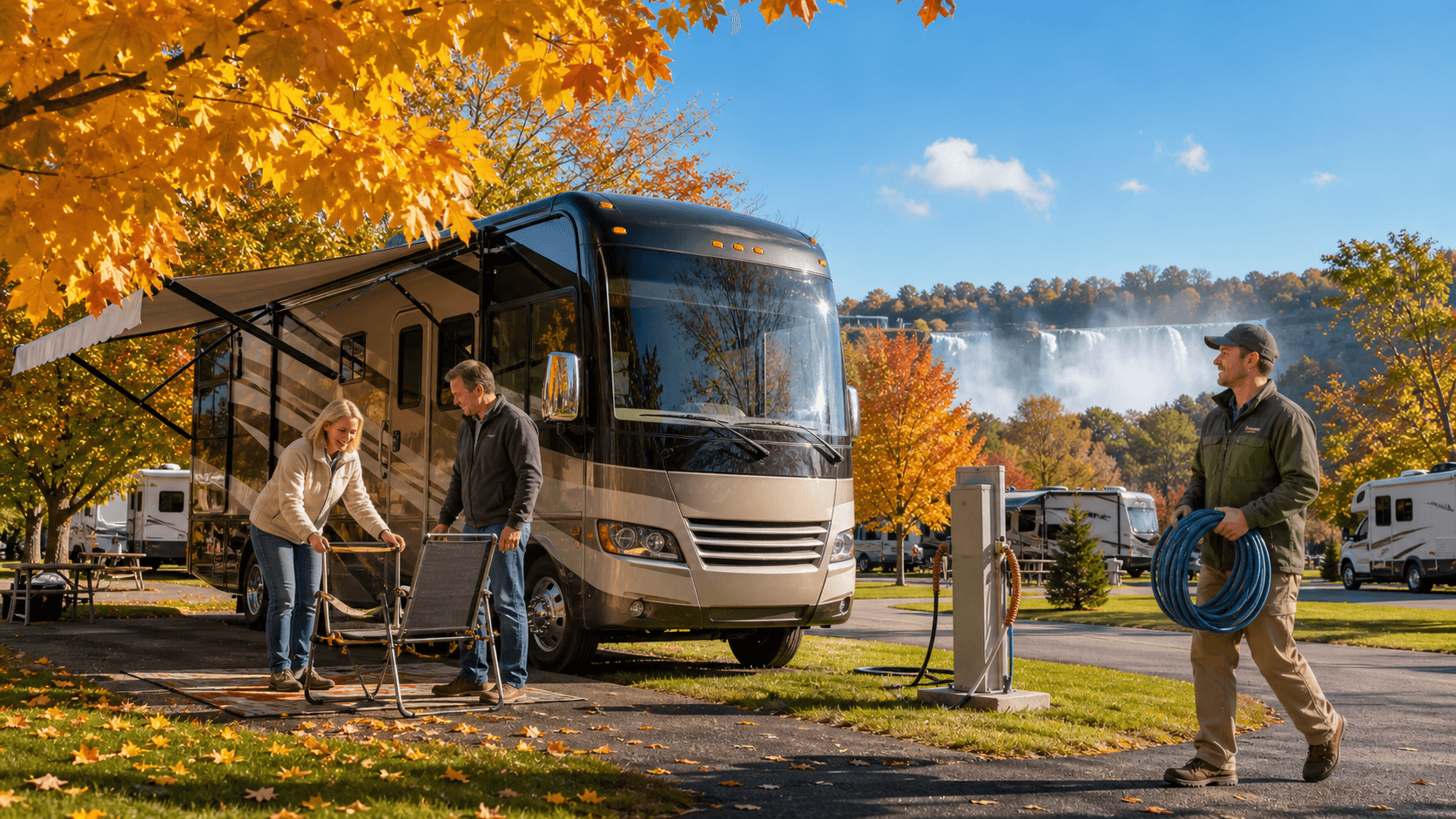
Outdoor views near Niagara Falls can be memorable in fall, but warm layers and rain gear are worth bringing along. When wind or rain changes the plan, Buffalo's indoor attractions, restaurants, breweries, and markets can offer a comfortable backup. Returning to a full-hookup site afterward gives you a place to dry out, warm up, and recharge.
Before settling in for the night, run through a quick arrival check:
- Level the RV and connect power safely
- Set the furnace thermostat for the expected low
- Organize wet coats, shoes, and pet gear
- Confirm water and sewer connections
- Keep a clear, well-lit path to the RV door
A little preparation goes a long way on a late-October stopover. By watching the forecast, allowing extra travel time, and setting up carefully, you can stay warm, connected, and ready for the next stretch of road.
Settle In With Full Hookups and Reliable Connectivity
For a comfortable overnight stop, choose RV parks near Buffalo, NY with the essentials already in place. At DINO RV Campground, we offer 30A and 50A hookups, potable water, sanitary connections, Wi-Fi, and a pet-friendly setting for travelers heading onward. Use the link to find our Hipcamp booking details and reserve your site.